
Like a hostess surveying the wreckage of her living room after a wild party, I am still mentally processing my journey to see the 2024 total solar eclipse in Waco, Texas. It all started back in 2017, when my brother, husband and I traveled to see the eclipse in Jacksonhole, Wyoming. We agreed that it was a once-in-lifetime, extraordinary experience that could never be duplicated. Almost immediately, we decided to recreate that experience with the rest of our extended family on April 8, 2024, the day the next total eclipse would occur in the United States.
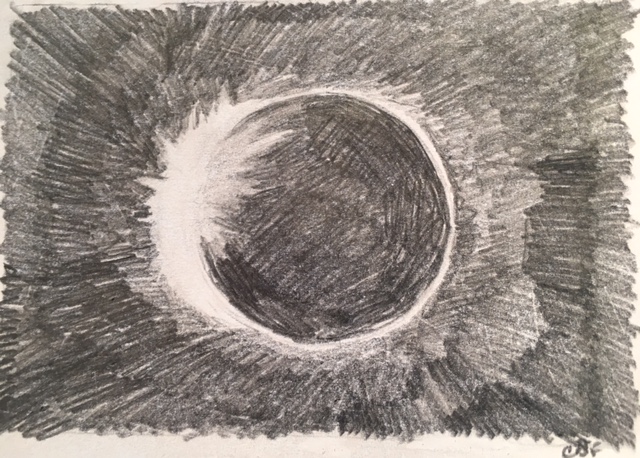
The planning began in earnest two years ago in 2022, when my brother and I started to research where to see this event. The zone of totality, where the moon completely covers the sun, would appear in a narrow band across fifteen U.S. states. My brother-in-law said that New Hampshire, Vermont and Maine were within driving distance of his house, and that seemed the most logical place to go. We explained slowly to him that there was practically zero chance of seeing the eclipse in the Northeast, because the weather would be awful and the clouds would block out the sun. Behind his back, we sniggered at his eclipse naivete. After reviewing historical weather patterns, we settled upon Texas as the location with the longest eclipse duration and the best chance of sunshine.
The next decision was how to experience the eclipse. Texans jumped on the planning bandwagon early and had an interesting assortment of options. My favorite were the festivals that featured RV parking, music, beer, and banjo picking circles. My brother, a wine aficionado, loved the idea of going to the Texas Hill Country outside of San Antonio to watch the eclipse at a vineyard over a boozy lunch. However, our disabled mother was joining us, and we could not confirm that the vineyards could accommodate her needs. Baylor University quickly became the frontrunner. They were partnering with the Lowell Observatory, NASA, and the Discovery Channel to hold a large viewing event with scientists, ample parking and VIP seating options. In mid-2022, I found myself making the unlikely announcement that I was planning a large family trip to Waco, Texas.
Fast forward to March 29, 2024. I saw the first extended weather forecast for the eclipse. I sent a text to our 11-person eclipse chat group noting that the “initial weather reports are not looking great” and provided my in-depth analysis of the situation. Our cousin Adam’s response began with the words, “As a meteorologist…” It felt somehow awkward that I had forgotten my cousin is a meteorologist, and that I had just explained weather to him. My brother-in-law then helpfully noted that the chance of sun for Vermont, right near his house, looked fantastic.
Over the next few days, the forecast for the eclipse day stayed remarkably consistent-the only question being whether the all-day thunderstorms would be accompanied by hail and tornadoes. By April 1st, cousin Adam sent us this text, “Looks like there is near 0% chance for clear skies on eclipse day. Not the best news.”
The online eclipse chat groups were filled with people wringing their collective hands in worry. Approximately once every thirty minutes, someone would post the following, message: “Hi, I am new to this group. Is anyone concerned about the weather in Texas?” People from all over the country began cancelling their plans to go to Texas, desperately trying to find their way to upstate Vermont, New Hampshire, and Maine, which was the only part of the country that showed nothing but sunshine for eclipse day. With hotels completely sold out in the Northeast and no suitable arrangements we could make to accommodate our mother’s needs, it proved impossible for us to pivot our eclipse plans to a new location. Two of our group cancelled their hotel rooms in Texas, but they agreed to wait until the very last moment to cancel their flights.
Millions of people across the country kept hitting the refresh button every minute or so on Weather.com, and I myself spent many long hours staring at the National Weather Service website. The National Weather Service has highly technical information about the jet stream, high pressure systems, and cloud coverage. I did not understand a single word of it, but I felt the need to keep my constant vigil over that website much like an athlete maintains a ritual before a big game. The ONLY people not panicking were the Texans.
In chat groups, Texans posted reassuring comments such as:
“Y’all need to CALM DOWN! Texas weather moves faster than a flea on a hound dog in hunting season. Everything will be fine.”
“Hi, life-long Texan here! The weather forecasts in Texas are never right. NEVER.”
“It is too soon to tell what will happen with the weather. Anyone who lives in TX knows that. Y’all need to stop freaking out.”Note: These are Maureen’s memories of the comments by Texans in chat groups. But, they were just like this. I swear.
We caucused as a family, and, by the morning of April 3rd, we had reconciled ourselves to staying home. Then, meteorologist cousin Adam sent this text, “Things are looking slightly more positive. There is an 80% chance of cloud coverage during the eclipse, but they should be thin clouds. It is possible we could get a good view.” Adam was the only expert in the world, as far as I could tell, with a hopeful viewpoint. In a textbook “group think” moment, we all made a pact to go to Texas anyway. We were so tired and anxious from looking at the weather, we had no emotions left. If Adam decided we should go, then we would go.
My dear, sweet, husband loves my family, but I think he views time with us as one would view a car wreck on a highway. You don’t necessarily want to look, but you can’t help yourself. I always give him the opportunity to bow out of a family event, but he usually shows up anyway. When I told him the trip was back on, he said, “This is a TERRIBLE idea. What about the hail? What about the tornadoes? Why are we going if we aren’t even going to see the eclipse?” I could only shrug helplessly and say we had no choice now. We had all made a pact to go. He said, “But, you all know this is a terrible idea?” I said, “Yes, absolutely.” I started packing.
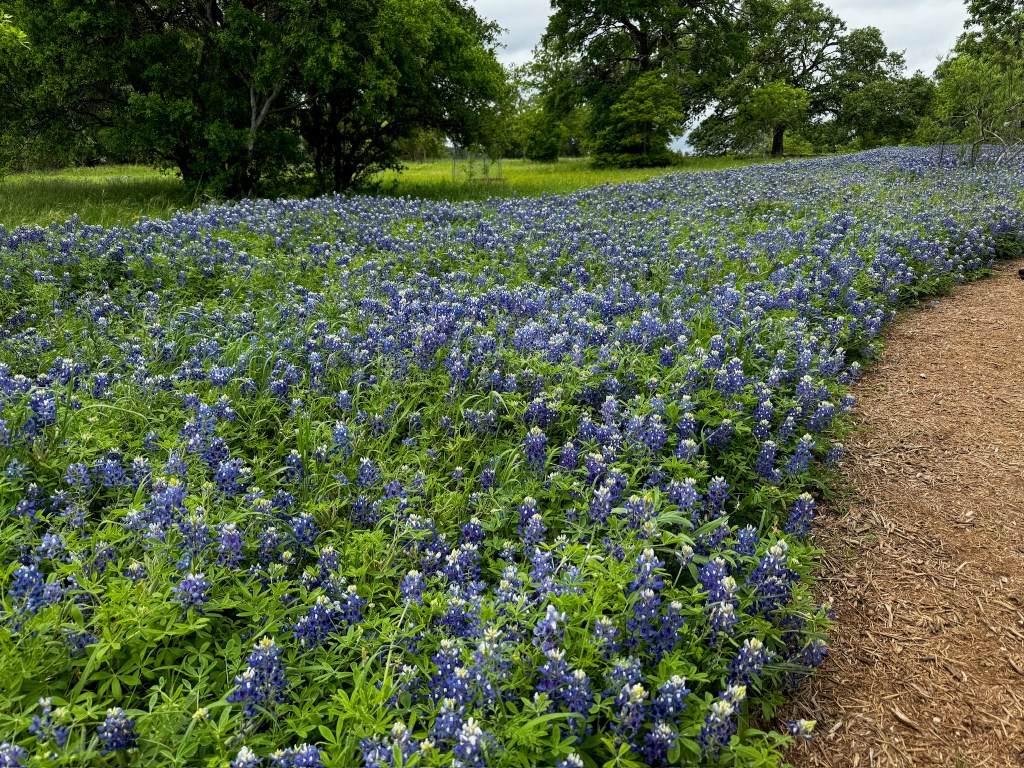
My family staggered their arrivals at the Austin, Texas, airport over several days. When our planes landed, we had zero expectations of actually viewing the eclipse. Instead, we cheerfully did fun Texas things like looking at a bluebonnet wildflower bloom, eating barbecue, and visiting the Texas state capitol building. The day before the eclipse we drove to Waco in a caravan. On the way, we stopped off at the airport to add more insurance coverage to our rental car.
The weather report now showed a strong possibility of hail the size of tennis balls on eclipse day. I was so busy staring at the National Weather Service website, I did not have enough time to research whether my credit card’s rental insurance policy would cover this damage. My husband looked at me with exasperation, and asked, “Why are we doing this if you think tennis ball-sized hail will hit this car?” I happily explained that since I had spent all the extra money on the additional car insurance, I had virtually guaranteed that the hail would not happen. Stunned by my brilliant logic, my husband drove on to Waco in complete silence.
After a fun night of Waco-hosted festivities on the eve of the eclipse, I checked the weather forecast one last time. Once again, the maps showed a high probability of “severe weather,” a 60-80% chance of cloud coverage, and rated the chance of seeing the eclipse in Waco as poor. Social media exhorted everyone to drive away from Central Texas to find a break in the clouds.
We awoke early on eclipse day to find a sky covered in thick clouds. I shrugged and vowed to make the most of this special event regardless. I walked into the hallway to find my brother-in-law staring out the window intently. He silently pointed to one small break in clouds from which a sliver of blue struggled to emerge. This glimmer of sunlight was infectious, and our spirits began to lift. By the time we arrived at Baylor University eclipse event, the sun was unexpectedly engaged in a full-fledged battle with the clouds. Throughout the morning, the scientists speaking at the event voiced tentative hope that we might be able to witness the eclipse after all the anxiety and worry.
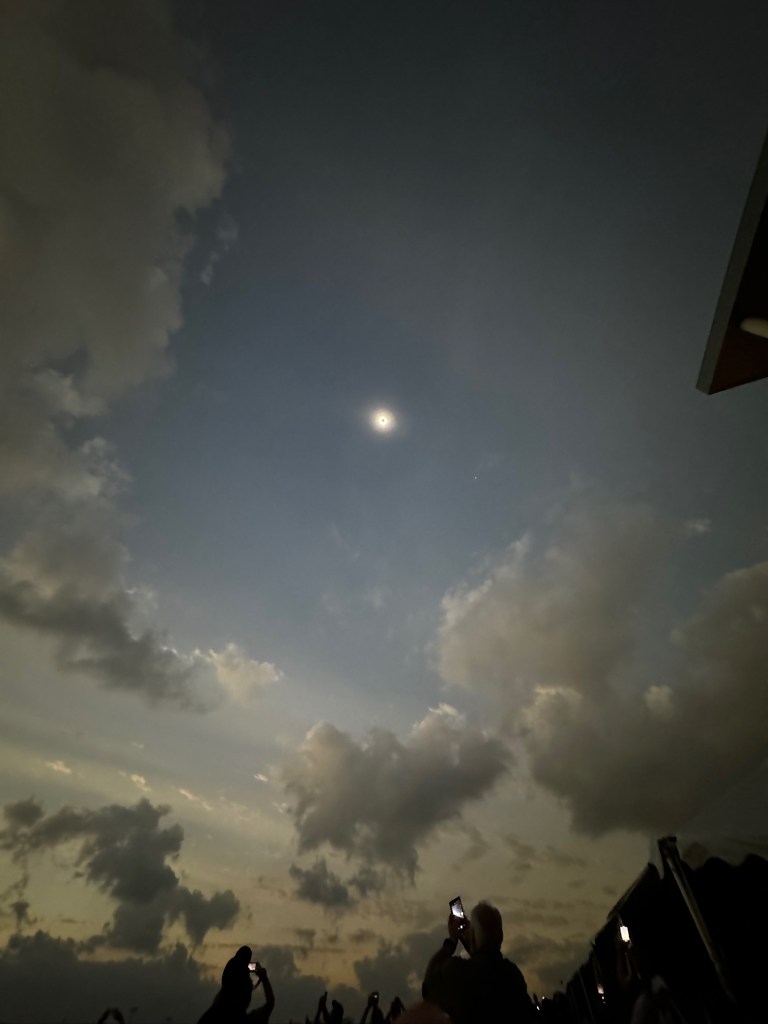
The total solar eclipse, that magical moment the moon completely covered the sun, was slated to begin in Waco at 1:38 PM. In the thirty minutes before the total eclipse, Cousin Adam gave us an expert, running commentary on the fast-moving clouds. At five minutes before the eclipse, he declared that a sudden break in the clouds would hold. By 1:36 PM, we knew he was right. As the scientists counted down the seconds to totality, we began to jump up and down, not quite believing we were about to witness one of the most spectacular wonders of the universe.
For more on my family’s eclipse adventures, please see:
Eclipse Frenzy 2017
Preparing to Go Dark: Eclipse 2017
Eclipse 2017: Was It Worth the Hassle?
Categories: Total Solar Eclipse, Travel
 Maureen's Suitcase